Biodiversity has been identified as a material sustainability topic for Elenia. We steer our operations on the basis of the EU’s biodiversity strategy. Our goal is to minimise adverse impacts on nature and strengthen positive impacts. Elenia’s most significant impacts on nature arise during the construction phase of electricity networks and in the upstream material production of the value chain.
The biodiversity roadmap guides goals and measures
In 2025, we prepared Elenia’s first biodiversity roadmap. The roadmap presents Elenia’s goals and concrete measures for improving biodiversity. Some of the measures are already underway and their implementation is regularly monitored. The goal is to identify the environmental impacts of Elenia's construction projects and increase understanding. We will train both Elenia’s in-house personnel and our partners to take into account nature-sensitive areas and nature risks.
More information on biodiversity roadmap is provided in our sustainability report.
Sustainable land use protects nature
We take biodiversity into account in the planning, the construction and the dismantling of the electricity network. We prefer joint construction together with municipalities and telecommunications companies to reduce negative impacts and promote sustainable construction.
In our operations, we take into account valuable natural areas, such as traditional biotopes, conservation areas, historical sites, museum areas and threatened species. We use this data to plan the routes of our electricity networks with due consideration for nature and the cultural environment, avoiding nature-sensitive areas. Through sustainable land use, we reduce, among other things, negative impacts on forest ecosystems.
We work to preserve nature and its biodiversity, particularly in land use, and we implement restoration and improvement measures that support biodiversity in collaboration with our partners.
Life in line corridors
The line corridors around electricity networks provide habitats for species that do well in open, sunny areas. Especially traditional biotopes, such as leas and meadows, thrive in line corridors, where the regular clearance is reminiscent of traditional agricultural mowing and ensures a favourable habitat. Line corridors are cleared every 4–8 years, depending on the voltage level of the electricity network.
Some endangered species, such as ringlets and woodlarks, have found sanctuary in the areas underneath overhead lines. Some of our line corridors belong to the Natura 2000 network, which represents valuable habitat types protected by the EU. We take the Natura 2000 areas into account already at the early stages of planning the underground cable system. We steer clear of conservation areas and plan the routes of our underground cables to avoid them as much as possible.
Underground cabling frees land for other uses
We are continuously upgrading our aging power grid to make it weather-resistant and ready for future needs. Land freed up by the removal of overhead power lines can be put to other uses.
We protect groundwater by monitoring the condition of all our substations and prevent potential oil spills by inspecting substations located in groundwater areas in particular. We also remove aging pole-mounted transformers from the grid as part of the underground cabling projects. Pole-mounted transformers are being replaced with new compact substations equipped with spill basins to prevent oil spills.

Flashing alarms protect birds
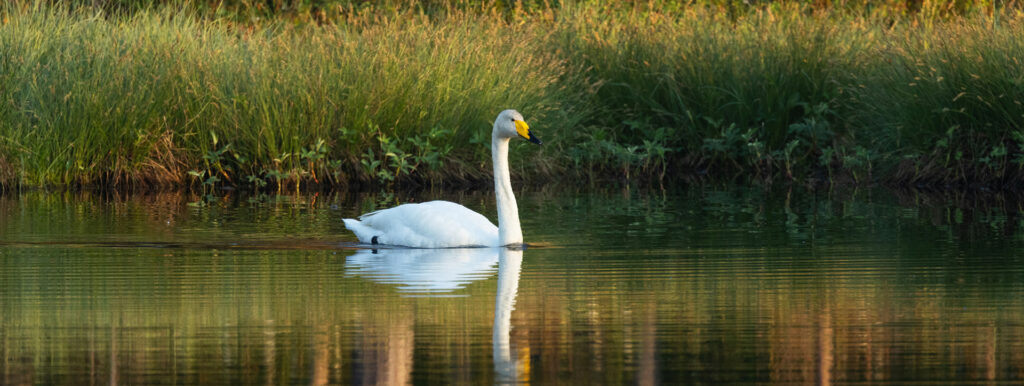
We cooperate with local residents and bird-watchers to protect our national bird, the whooper swan and other birds as well. Outside cities and urban areas, the electricity network comprises overhead lines, which may be hazardous, especially in the take-off and landing areas. We try to prevent collisions by installing flashing alarms on the power lines. Birds notice them and steer clear of the power lines. We install hundreds of alarms each year and, through cooperation, the number in our network has been increased to over 3,000.